

IMPROVING OUR SCHOOLS’ EDUCATIONAL STANDARDS IS CRITICAL TO OUR FUTURE

By Cliff Reece
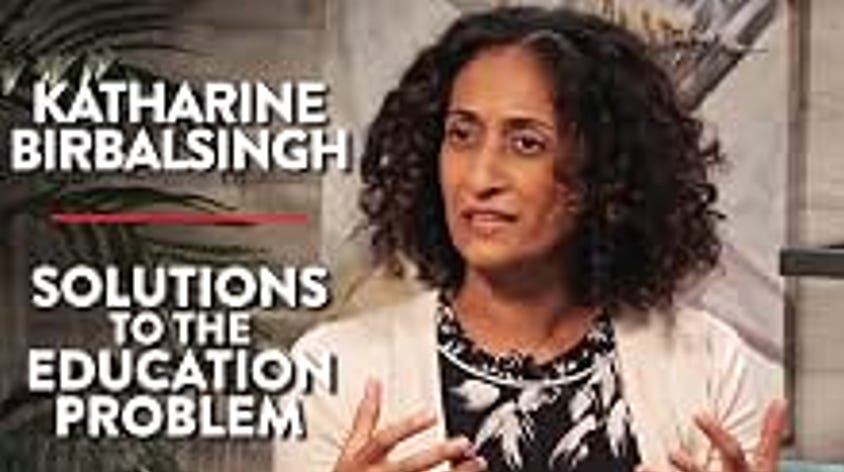
Katharine Birbalsingh has been deemed “Britain’s Strictest Headmistress”.
Founder of Michaela Community School in London, Birbalsingh has built one of the UK’s top-performing schools by rejecting the educational fads of the last generation and returning to older principles: discipline, personal responsibility, and patriotism.
The Michaela Community School is an inner-city, non-selective charter school.
Despite three and a half years of opposition from unions and councils, Birbalsingh fought to be able to provide a good schooling alternative for London’s poorer communities.
And she’s succeeded.
Her school has repeatedly ranked No. 1 in student progress in the entire country, and thousands of visitors from around the world have come to study and learn from her model.
In the interview featured in the link below, Birbalsingh reveals how Western institutions have quietly abandoned the moral formation of children.
This, she argues, has driven civilizational decline more than any policy failure.
Birbalsingh argues that many of today’s schools immerse children in a culture of grievance and victimhood rather than agency and duty.
She details the three pillars of Michaela’s educational approach: discipline, teacher-led instruction, and what she calls “small-c conservative values,” such as self-sacrifice, ownership, and accountability.
In the interview, Birbalsingh states that many parents these days are a bit lost when it comes to thinking where they should find traditional advice on how to raise their children. And this could be from toddlers right through to teenagers.
“It’s really hard in the age of gentle parenting, where if you go into a bookshop, that’s basically all you‘ll find. It’s hard to know what our grandmothers knew, what our grandmothers knew that works. I’ve demonstrated that many times over with the school, Michaela, that I set up in 2014. I’d say three things make us different”, she said.
“I’m called Britain’s strictest headmistress because I believe in discipline for children. I think, you need to hold the line with them, and you need to punish them when they’re naughty. And you need to praise them when they’re good.
“And these days, the word punishment really is a bad word: detention. I mean, schools obviously give children detentions, but there’s a real sense of shame around it as opposed to there being shame around what the child did in order to get the detention.
“So that’s the first thing, the discipline that makes us different.
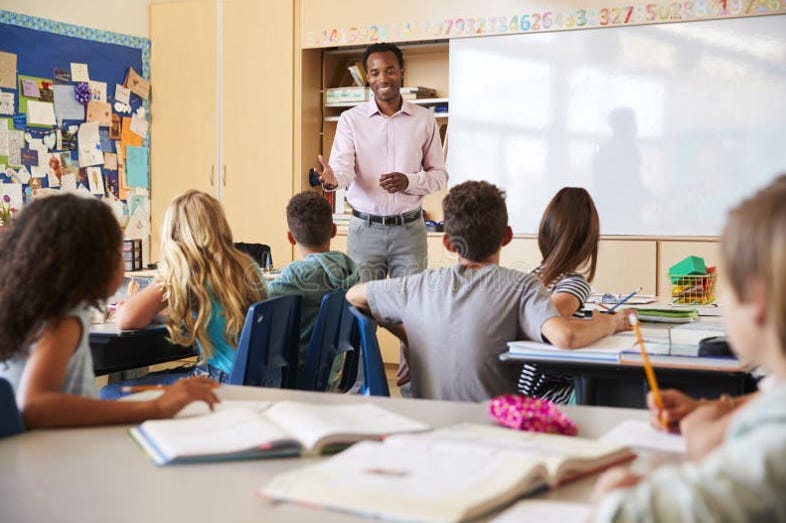
“The second thing is the teaching methods, and that really is all rooted in the idea of the adult being the authority in the classroom. The adult is in charge.
“The adult is able to lead the learning in the classroom, and the children are not the ones leading the learning around a piece of sugar paper with desk screens.
“Then the third thing, which is foundational to everything, are the values at the school, which I always call small-c conservative.
“They’re the sorts of values that our grandmothers all knew. If you haven’t done your homework, that’s on you. You’re responsible. You have agency. You could do things differently if you wanted, and you didn’t.
“Making excuses for children nowadays means there’s no sense of personal responsibility.
“Another thing I’d say is a sense of duty towards others.
“You might put others before yourself. You might sacrifice something that’s important to you for the sake of others. Again, that is a small-c conservative value that I think has almost disappeared from young people.
“Many just don’t think like that. It’s very much me, me, me.
“The way young people often feel is to be victims. A sense of victimhood, whatever identity politics lens they see the world through, that’s my victim card, and this is how I identify, as opposed to I’m a being with agency. I’ve got one set of cards that I’ve been dealt, and I’m going to deal those cards.
“And sure, life isn’t fair. Sometimes things don’t go your way. Sometimes you’re born with less than someone else. But who cares? I mean, you’ve got one life. You’ve got to live it. And you should live it in the best way possible.
“But you’ve got to have a completely different attitude and believe in agency and believe in personal responsibility, whatever your circumstances.
“So, really, very much rejecting grievance, rejecting victimhood, believing in ownership, believing in personal responsibility.
“And those values we very much instil in our children at Michaela Community School”.
If you are concerned about Australia’s declining educational standards and the lack of discipline in our schools, please share this article with others or forward the link below so they can watch the interview.
Our children are critical to our future.